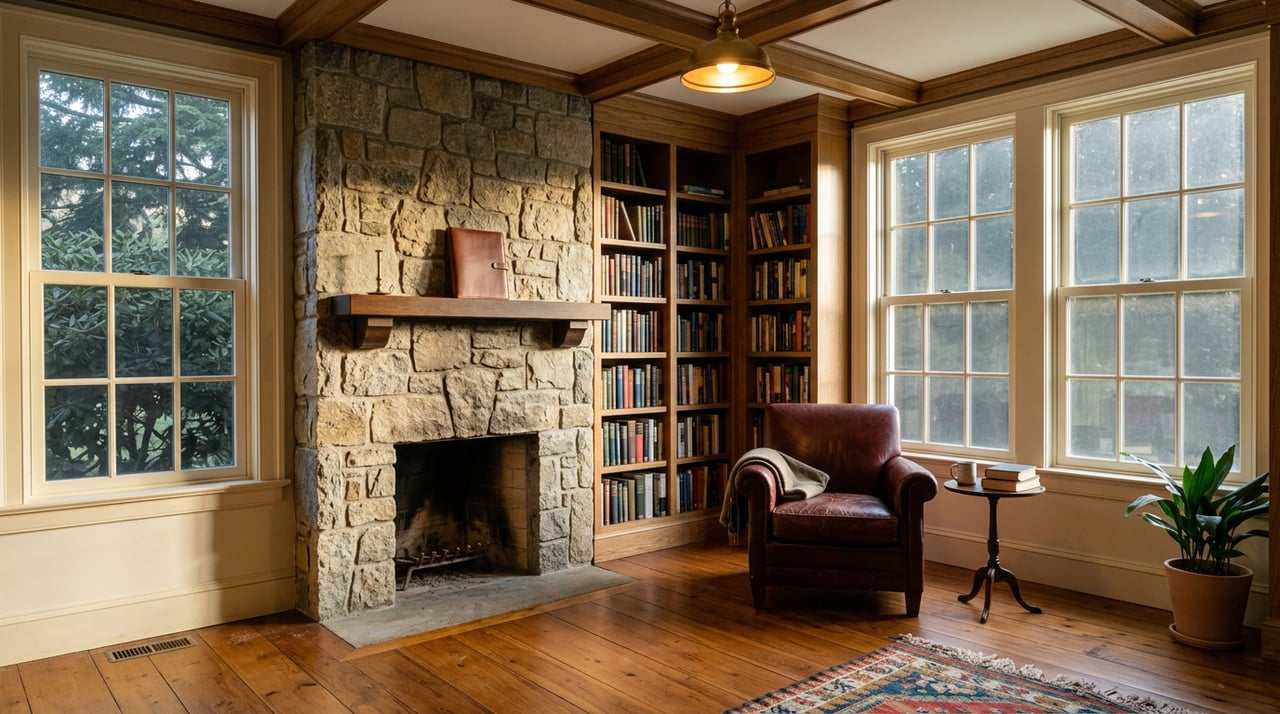
What Bowery Road Real Estate in Highlands NC Buys in 2026
Open a portal, type Highlands, and the number that greets you is a median. As of the most recent Redfin snapshot, that median sale price sits at roughly $2.33 million, with homes trading around seven percent below list after about 148 days on market. Then click through to Bowery Road, and the active listings tell a different story: $6.9 million, $8.7 million, $9.15 million. The instinct is to reach for a per-square-foot calculation and decide the corridor is simply expensive.
That instinct is the wrong tool. The median describes a town-wide product mix. Bowery Road is a different product, priced against a different scarcity, and the gap between the two numbers is the most useful thing on the page once you know how to read it.
The Highlands town median blends downtown condos, wooded cottages, and larger estates into one figure. Bowery Road, the corridor running from Main Street toward Horse Cove, is composed almost entirely of estate-scale parcels with pre-war and restored pre-war residences. Comparing the two is not a valuation exercise. It is a category error.
Here is how the currently active Bowery Road inventory reads against the town-wide backdrop:
| Property | Acreage | House | Asking |
|---|---|---|---|
| 225 Bowery Road | ~4 acres | ~6,500 sf, 1922 build, restored by John Underwood, reimagined by architect Sam Edgens | ~$6.997M |
| 1877 Bowery Road | ~3.6 acres | ~7,612 sf, 4 bed / 6 bath | ~$9.15M |
| 462 Bowery Road | Active homesite / estate parcel | Corridor position, walkable to town | Active listing |
| Highlands, town-wide | Mixed | Mixed | Median sale ~$2.33M, ~$765/sf, ~148 DOM |
The town median tells you what an average Highlands transaction looks like. It does not tell you what four largely usable acres inside the town limits, with a restored 1922 residence and direct Greenway access, would cost to assemble from scratch. The honest answer is that it could not be assembled from scratch, which is the entire point.
The Bowery Road premium is not a finish-level premium. Buyers who tour the corridor and try to reconcile the number against countertops and cabinetry come away confused. The corridor is pricing four inputs that the MLS grid does not have fields for, and none of them are elastic:
A per-square-foot calculation asks how much house you are buying. On Bowery Road the more honest question is how much of Highlands you are buying, and whether anyone will get the chance to buy it again.
Terrain and zoning tighten the case. Meadows Mountain Realty's 2026 market commentary is direct that new construction across the plateau is constrained by both, and that resale inventory in the top-tier communities has thinned. On a corridor already defined by century-old parcels and single-generation ownership, that constraint is not a talking point. It is the mechanism.
The market context matters, because a scarcity thesis reads differently in a rising tape than in a cooling one. The 2026 tape has cooled from its 2020 to 2022 acceleration, and buyers should know what that means for a corridor like Bowery Road.
Nationally and locally, the 2026 forecast has normalized. Meadows Mountain Realty's April 2026 analysis puts steady-state appreciation in the two to four percent range annually, with no major forecaster calling for a nationwide decline. The plateau specifically continues to draw second-home demand from out of state, and luxury properties with views, water, or documented character continue to hold value more firmly than the mid-market. Mountain Life Properties, in its June 2026 report, characterized the Highlands and Cashiers market as tilting toward buyers for the first time in years.
For Bowery Road, that shift shows up in two places. The first is patience. The town-wide 148 days on market average is not an anomaly on the corridor. Estate listings at these price points have always required a longer marketing runway, because the buyer pool is smaller and the tour cycle is longer. Second-home buyers should expect that a property they like was likely on market before they arrived and will remain there while they think.
The second is negotiability on longer-listed inventory. Redfin's snapshot has Highlands homes generally closing about seven percent below list, with the more sought-after homes moving closer to three percent below list in about sixty days. Bowery Road parcels that have carried a listing through a full season will often have room to negotiate that the fresh-to-market listing next door does not. The scarcity thesis does not translate to no-discount pricing. It translates to pricing that holds through the cycle, which is a different claim.
Buyers who approach the corridor with a standard suburban-comp mindset run into three specific frictions. All three are worth understanding before an offer is drafted.
Comps do not comp cleanly. There are not enough Bowery Road transactions in any given twelve-month window to build a defensible price-per-foot argument. Valuation on the corridor is a matter of comparing scarcity bundles rather than square footage, and appraisers working from a broader Highlands data set will sometimes reach conservative conclusions that do not reflect what the corridor's buyers are actually paying. A financing contingency should be structured with that in mind.
Land use deserves independent verification. The phrase "largely usable" in a listing description is a marketing summary, not a survey. Buyers considering a compound, an outbuilding, a greenhouse, or a guest structure should confirm setbacks, easements, and any historic-district or conservation constraints in writing before removing due diligence. The North Carolina purchase contract's due diligence period is a tool built for exactly this question.
Provenance should be documented, not assumed. The Ravenel-family narrative at 225 Bowery, the John Underwood restoration credit, and the Sam Edgens architectural reimagining are the kind of details that support a premium and support a resale story later. Buyers should ask sellers for the paper: original plans, restoration invoices, historical photographs, and any registers or surveys that anchor the story. On this corridor those documents are part of the asset.
Why do Bowery Road listings sit so far above the Highlands median? Because the median blends condos, cottages, and estates across the town. Bowery is an estate-only corridor with usable acreage, direct Greenway access, and restored pre-war architecture. The median and the corridor are not measuring the same thing.
Is the 2026 slowdown a reason to wait? The 2026 forecast from major housing institutions is normalization at two to four percent annually, not decline. On a supply-constrained corridor where new construction is not possible, waiting for a discount that requires broader distress may not produce one. Waiting for a specific longer-listed property, on the other hand, sometimes does.
How walkable is the corridor really? The Greenway Trail entrance across the street from 225 Bowery leads directly into downtown Highlands. From Main Street, the corridor is a short drive down Bowery Road off the route toward Horse Cove. Both foot and vehicle access are unusually short for parcels of this size.
If you are weighing a Bowery Road purchase or preparing to bring one to market, the corridor rewards a conversation before it rewards a number. Michelle Michaud and the team welcome the chance to walk you through the current inventory, the private-sale history behind it, and how the 2026 market frames the decision. Schedule a Complimentary Luxury Listing Consultation to begin.
Stay up to date on the latest real estate trends.
Whether you're a first-time buyer or a seasoned developer, our property services are designed to exceed expectations. We consistently sell homes quickly and above asking price.