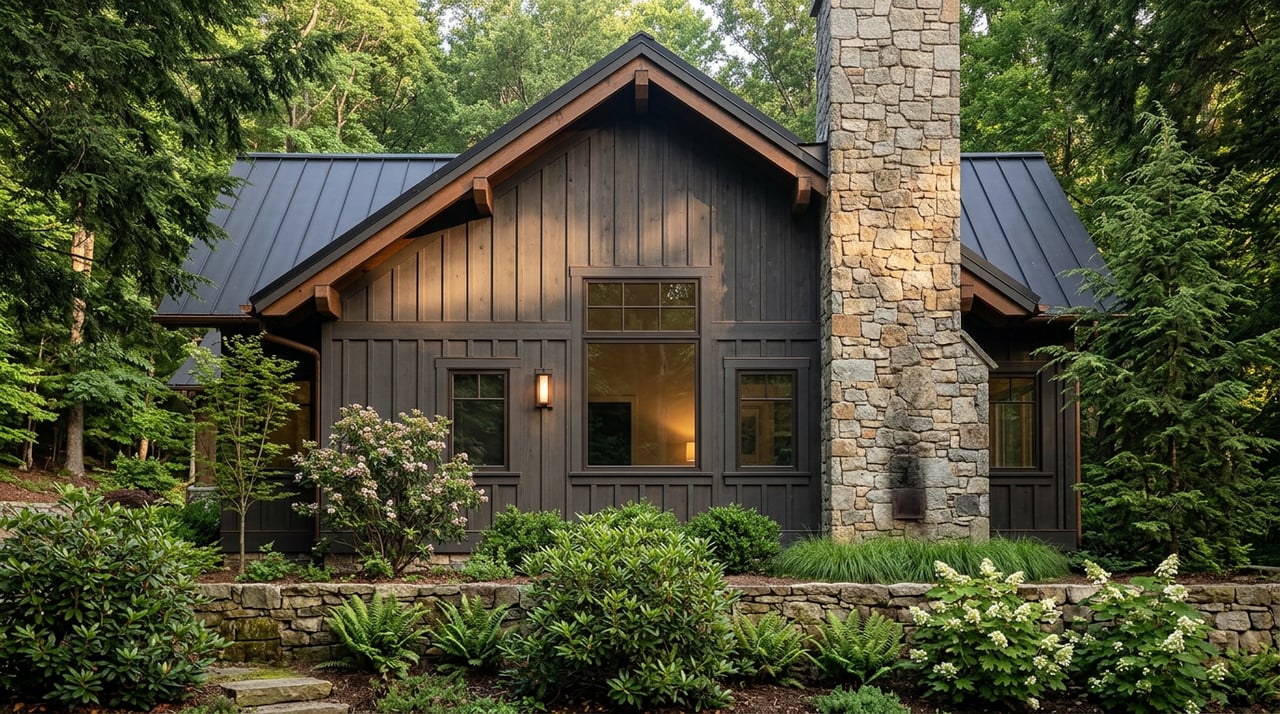
Why Ravenel Highlands NC Real Estate Commands a Premium
The Highlands town median last month sat near $2.33 million, off roughly 7.5% year over year, with homes going pending in about 148 days and closing around 7% below list price. Recent Ravenel Ridge listings, meanwhile, have moved in a $3 to $5 million band. A portal will show you both numbers and let you draw the obvious conclusion: Ravenel is the premium address, and premium addresses cost more.
That reading is close enough to be useful and wrong enough to cost you money at the negotiating table. The gap between the town median and the Ravenel band is not a finish premium or a fashion premium. It is the market pricing a scarcity stack that a 1914 land gift, a watershed rule, and the shape of the mountain itself have made structurally unreplicable. Understanding what that stack contains changes how a serious buyer reads the softer 2026 tape.
The first friction in Ravenel is inventory. The community was platted with only 31 estate homesites, each on two or more acres, and available inventory typically reads as "only a few homes currently available" rather than a browsable pipeline. When a portal returns zero matches, that is not a data glitch. It is the product.
The second friction is elevation and geography. Ravenel sits above 4,000 feet with long-range views of Satulah, Little Bear Pen, Shortoff, Whiteside, Fodderstack, and Chimneytop, and the gate opens onto the Rhododendron Trail, which connects to Ravenel Lake, Sunset Rock, and downtown Highlands on foot. That combination, gated privacy at estate scale with a walking connection to Main Street, is not a marketing line. It is a physical fact that no other Highlands community reproduces at the same acreage.
The name on the gate is not decorative. The Ravenel family arrived on the plateau in the 1860s from Charleston, and over the following half century they assembled and then gave away or sold at concessional prices much of the land that now defines Highlands' civic geography. In 1913 Prioleau Ravenel Jr. sold large portions of land north and east of Highlands to the federal government at low prices for preservation as National Forest. In 1914 his family donated Sunset Rock to the town. The old Lindenwood Park, once a Ravenel-owned tract of paths and a lake opened to the public, became the present site of the Highlands Biological Station and Nature Center. The Ravenels also donated land and funds for First Presbyterian Church and, through the Islington Inn, built early lodging on South 4th Street.
That century of dispositions is what sits underneath the modern subdivision. The land the family kept, subdivided, and sold as homesites is a residual of what was already the most consequential private landholding in town.
The Ravenel price band is not a bet on a name. It is a lagging price signal on a hundred-year decision to give most of the surrounding land away.
Highlands sits inside a state-classified watershed, and the North Carolina Department of Environmental Quality's low density rules require lots of at least two full acres in the WS-II Critical Area, one acre in the WS-III Critical Area, and half an acre in the balance of the watershed, with 30 to 50 foot stream buffers layered on top. In practice that means the Ravenel product, gated, in-town, two-acre-plus, walkable to Main Street, cannot be replatted from an existing subdivision or assembled out of small lots. The regulatory floor sits at the same acreage the community was built on.
Stack the constraints and the supply story becomes concrete:
New construction on the plateau is running into the same terrain and zoning that produced Ravenel in the first place. The BHHS Meadows Mountain team's April 2026 read on the plateau reached the same conclusion from the supply side: gated communities with limited resale inventory, and new construction constrained by terrain and zoning, are holding value more firmly than the median suggests.
The Highlands top-line for the month ending in early July 2026 tells a softening story: median sale price around $2.33 million, down 7.5% year over year; median days on market around 148; average sale about 7% below list. Sale price per square foot, meanwhile, was up roughly 10% year over year. Two of those numbers are pulling in opposite directions, and the reason matters.
| Metric, mid-2026 | Highlands town | Read for Ravenel |
|---|---|---|
| Median sale price | ~$2.33M, down ~7.5% YoY | Not the reference set; Ravenel resales have listed in a $3–5M band |
| Median days on market | ~148 | Thin turnover; a Ravenel closing is a low-frequency event, not a monthly comp |
| Sale-to-list | ~7% below list | Negotiation exists, but on longer-listed properties, per current market commentary |
| $/sq ft | +10% YoY | Consistent with buyers paying up for quality and location, not down for square footage |
A falling median with rising price per square foot is what a mix shift looks like. Fewer trophy sales in a given month drag the median down while the underlying quality-adjusted price keeps drifting up. In a market where multiples of the median trade rarely, one Ravenel closing lands like a boulder in the pond and then months pass. National forecasters cited by BHHS Meadows Mountain in April 2026 put expected annual U.S. home price growth at 3 to 4% through 2028, with the plateau having normalized from the 15 to 20% surges of 2020 to 2022 into a 2 to 4% range. That is the tape a Ravenel seller is negotiating against, not a crash tape.
At the town median, a buyer is generally selecting among cottages, mid-century homes on modest lots, and condominiums, most of them outside a gated perimeter. At the Ravenel band, the buyer is selecting for a bundle that the median product cannot deliver at any price: an estate parcel of two acres or more, inside a gate, above 4,000 feet, with named long-range views, and a front-gate walk that lands at Sunset Rock and then Main Street. Recent Ravenel resales have included homes with heart-of-pine floors, stone-anchored great rooms opening onto covered gazebo porches with fireplaces, detached guest apartments, and European-influenced primary suites with dual dressing areas, all inside a community whose common ground includes tennis courts, walking trails, and a pavilion.
None of that is unique on the plateau in isolation. The stacking is what is scarce. A comparable estate lot outside town trades some combination of the gate, the elevation, the view axis, or the walk to Main. A comparable in-town cottage trades the acreage and the gate. The Ravenel price band is what it costs to refuse those trades.
For a buyer, the practical consequence is that the standard portal comp set understates rather than overstates the reservation price. For a seller, the softer 2026 tape is real but selective; the properties most exposed to a 7% below-list settlement are the ones whose scarcity story reduces to finish and staging, not the ones whose scarcity is baked into the plat.
Is Ravenel actually inside downtown Highlands, or is that marketing language? It is inside the town, with a short walk across to the trail that leads to Sunset Rock and on into the commercial core. The relevant distance is measured in minutes on foot, not miles by car, which is what makes the two-acre estate scale unusual for the address.
Could a developer replicate Ravenel today? Not at the same combination of acreage, gating, and in-town access. Watershed classification sets a two-acre floor in the WS-II Critical Area, stream buffer rules take further land out of the buildable envelope, and the surrounding acreage was largely deeded to public and conservation ownership more than a century ago. The physical inputs no longer exist in one place.
Does the softer 2026 median mean Ravenel prices are about to fall? The mid-2026 data shows the town median down and price per square foot up, which is consistent with a mix shift rather than a broad repricing. Longer-listed properties across Highlands are seeing more negotiation, per current market commentary, but scarcity-anchored product with structurally limited supply has historically absorbed those cycles differently than generic inventory.
How thinly does Ravenel actually trade? Thinly enough that any single month's town-level statistics will rarely include a Ravenel closing at all. A serious analysis pulls a rolling window of several years and reads each transaction as an event, not as a data point in a trend line.
The number to hold in your head is not the town median. It is the count of parcels that will ever exist inside the Ravenel gate, and the shorter list of those likely to trade in any given season. Pricing, negotiation posture, and timing all follow from that count. In a softening tape, the properties most protected are the ones whose scarcity is written into the plat, the watershed map, and a hundred-year record of land dispositions. Ravenel is the clearest example of that structure inside the town of Highlands.
If you are weighing a purchase or a listing decision inside Ravenel and want a read grounded in the actual transaction history of the enclave rather than the town median, Michaud Rauers Group offers a complimentary luxury listing consultation. Schedule a conversation and we will walk the numbers, the plat, and the comparable set that actually applies to your address.
Stay up to date on the latest real estate trends.
Whether you're a first-time buyer or a seasoned developer, our property services are designed to exceed expectations. We consistently sell homes quickly and above asking price.