The Mirror Lake Dredging Project Is Finally Moving. Here's What That Means For Your Deal.
An excavator has been parked next to Mirror Lake with yellow boundary lines staked into the ground around it. That is not a rendering or a fundraising graphic. It is the physical start of a restoration effort that Highlands has talked about for close to three decades. If you are buying or selling on this lake in 2026, the story you need to understand is not "the lake has a sediment problem." That much has been public knowledge for years. The story is which 250 feet of shoreline you are looking at, and where that stretch sits in a sequence that is only partly finished.
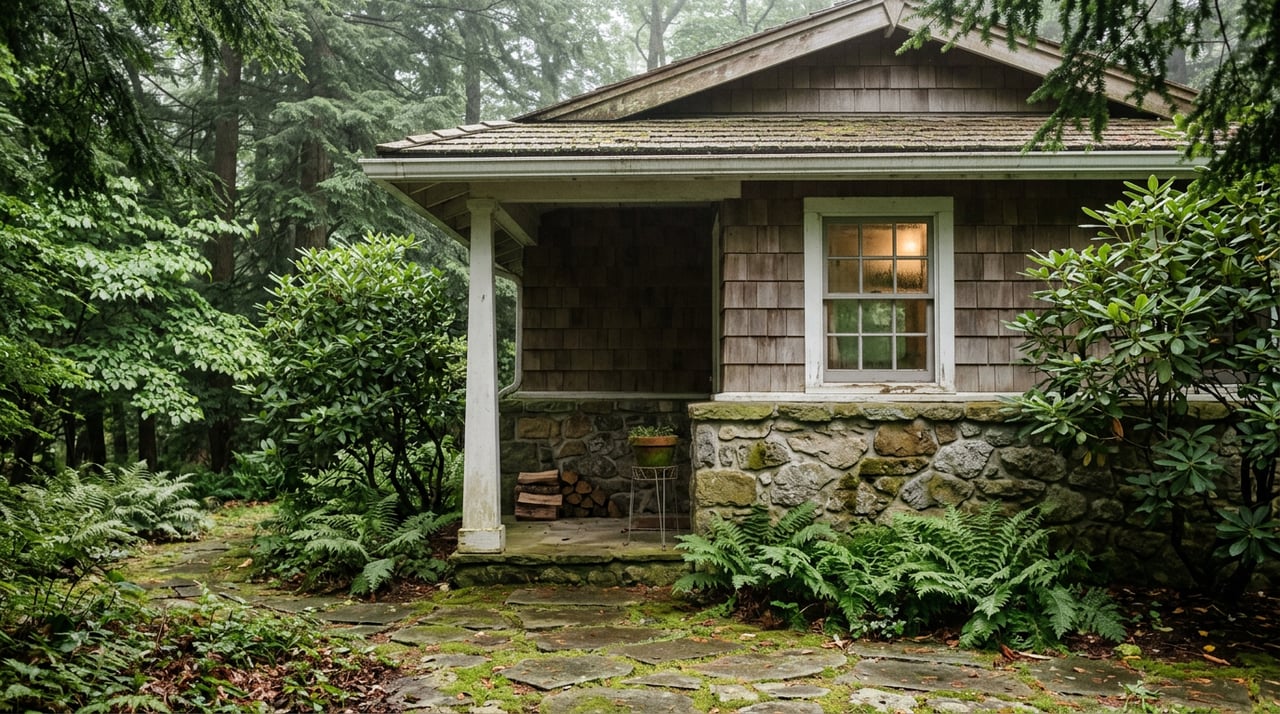
Mirror Lake sits in one of the oldest sections of Highlands, ringed by some of the town's earliest homes. Water that once ran deep enough for swimming and fishing has, in places, silted in to the point that canoes scrape bottom. The town's engineering consultant put the timeline in blunt terms at an April 2025 board meeting: it took seventy years to get this way, and nobody wants to repeat the cycle. A preliminary survey presented that same month found water depths running to as little as a few inches in certain stretches of the lake system.
The Mirror Lake Improvement Association, a nonprofit formed in the 1990s specifically to raise money for this work, has spent most of that time building toward a plan rather than executing one. That changed when MLIA retained River Sand Inc., a Georgia-based restoration firm, and put together a three-phase dredging plan with the town's backing.
This is the part a listing description will never spell out, and it is the part that should actually shape your offer.
| Phase | What It Covers | Who's Paying | Status As Of 2026 |
|---|---|---|---|
| Phase 1 | A 250-foot channel both upstream and downstream of the Mirror Lake Road bridge | Mirror Lake Improvement Association, working with contractor River Sand Inc. | Equipment moved on site and hydraulic dredging into geotextile bags began; the contractor's own timeline called for substantial completion by summer 2025 |
| Phase 2 | Channel widening upstream along Cullasaja Drive to roughly 11 feet across and 4 feet deep | Town of Highlands, using a $5 million state grant | In engineering and permitting review following the town board's April 2025 briefing from McGill Associates |
| Phase 3 | A return to the Phase 1 boundary with continued dredging downstream | Town of Highlands, same state grant | Not yet scheduled, contingent on how Phase 2 permitting and disposal costs play out |
The practical read is this. If you are evaluating a property near the Mirror Lake Road bridge, you are looking at the stretch of shoreline that has already had money and equipment behind it. If your lot sits further along Cullasaja Drive or in the downstream reaches slated for Phase 3, the depth restoration you might be picturing is still working through permitting, and permitting here is not a formality. Dredging in this system requires sign-off from the U.S. Army Corps of Engineers, the NC Department of Environment and Natural Resources, and the U.S. Fish and Wildlife Service, because the work touches wetlands and a river corridor, not just an isolated pond.
When the Mirror Lake Improvement Association first pitched this plan to the town board in 2022, the group put the total project cost at roughly $4.2 million, with Phase 1 alone estimated near $450,000. The nonprofit's current project page now describes the full three-phase effort as costing just over $3 million.
That is not a typo. It reflects a project whose scope is still being drawn even as the work begins. McGill Associates, the engineering firm advising the town, flagged the same uncertainty in its 2025 report: unit costs for large-scale dredging could run somewhere in the $75 to $80 per cubic yard range, but the final number depends heavily on how far the dredged material has to travel for disposal. The two candidate sites are the closed Old Highlands Landfill, an 8 to 9 mile round trip, and the Franklin Landfill, closer to 40 miles away. Haul distance alone can swing the budget by a meaningful margin, and a full-depth dredge across the whole lake system would likely trigger wetlands mitigation requirements that neither of the published cost estimates fully account for.
For a buyer, the takeaway isn't that the numbers are wrong. It's that the project's edges haven't been finalized, and neither has who pays for what comes next. Which leads to the detail most worth asking about before you write an offer.
At that same April 2025 meeting, MLIA representative Pat Gleeson raised an idea that hasn't been resolved: a special assessment district for Mirror Lake property owners, structured so residents contribute annually toward a maintenance fund. The logic is straightforward. Once the lake is dredged, routine maintenance every two to three years would cost far less than letting seventy years of sediment build up again. But a special assessment district is not the same as an informal suggestion. If the town moves forward with one, it becomes a recurring carrying cost tied to the property, similar in spirit to a fire district tax.
As of this writing, that structure has been discussed but not adopted. If you're under contract on a Mirror Lake property, this is a specific, answerable question to raise with the seller or the town: has any assessment district been formally proposed, and if so, what would the annual cost look like. It is the kind of detail that never shows up in a listing sheet and rarely comes up unless you ask directly.
Buyers eyeing a 1930s or 1940s cabin on this lake often assume the biggest risk is an aging septic system failing under an old stone cottage. That assumption is mostly outdated. Back in 2011, McGill Associates installed more than 12,600 linear feet of gravity sewer line and a pump station serving the Mirror Lake area, funded through the American Recovery and Reinvestment Act. Most of the neighborhood has been on public sewer for well over a decade.
Where diligence still matters is water supply, not wastewater. Sewer service handles what goes out of the house, not what comes in. A number of Mirror Lake listings still reference private wells, including recent updates to well pumps and piping on individual properties. Highlands sits in a plateau region where well water is known to carry naturally high sulphur and metal content, which is why the town's own drinking water protections were built around surface sources rather than groundwater. If you're buying a cabin here, ask specifically whether the property draws water from a private well or the municipal system, and if it's a well, request current water quality testing rather than assuming it mirrors the sewer story.
If you own a home along Mirror Lake and you're weighing whether to list this year, the dredging story works in your favor more than it works against you, provided you frame it accurately. A buyer who does even modest research will find the sediment issue on their own. What differentiates a well-prepared listing is showing exactly where the property sits relative to Phase 1, Phase 2, and Phase 3, and pointing to the nonprofit's public project updates as a transparent, verifiable source rather than leaving the buyer to piece it together from old newspaper clippings.
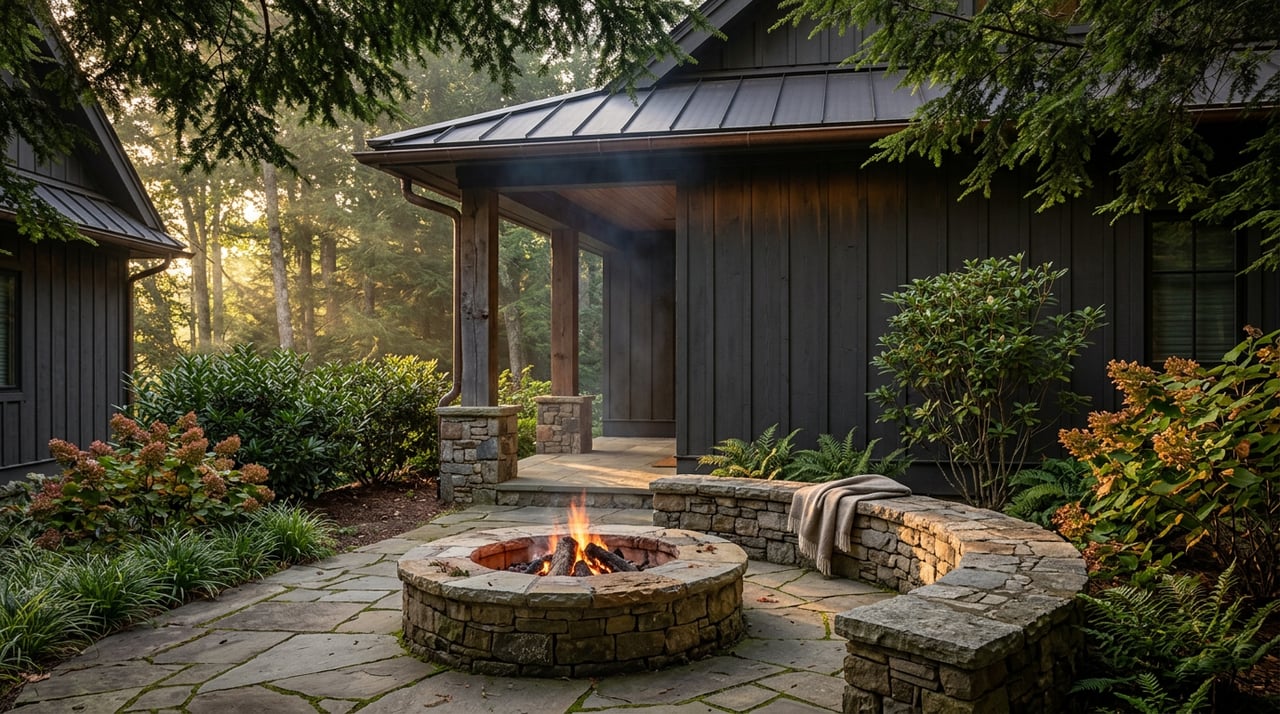
It also helps to mention what MLIA is building beyond the dredging itself. The association is funding a set of amenities entirely on its own dime: 40 to 45 canoe racks near the bridge in an area residents have nicknamed the Mirror Lake Yacht Club, along with a fire pit and picnic table, and a second gathering space at the corner of Netsi Place and Hickory Hill with a gazebo, small dock, and walkable paths. None of that shows up in tax records, but it's the kind of neighborhood investment that tells a buyer the lake's future is being actively shaped, not just discussed.
Will I be responsible for dredging costs if I buy on Mirror Lake? Not directly for the work already funded. Phase 1 was paid for by the Mirror Lake Improvement Association, and Phases 2 and 3 are covered by a $5 million state grant administered by the Town of Highlands. The open question is the proposed special assessment district for future maintenance, which has been discussed but not formally adopted as of 2026.
Is the sediment an issue for financing or appraisal? It hasn't historically been treated as a defect that affects title or insurability. It's a water-depth and recreational-use issue, not a structural one. That said, a knowledgeable buyer's agent should be able to speak to it directly rather than letting an appraiser or lender encounter it cold.
Does an older cabin near the lake mean an outdated septic system? For most of the neighborhood, no. The 2011 sewer conversion addressed wastewater for the majority of properties. Confirm whether a specific home is on public sewer or still relies on an individual system, and separately confirm the water source, since that's the piece more likely to need attention.
Mirror Lake's restoration has moved from a decades-long conversation to an active construction project, and that shift changes what due diligence looks like here. The right questions now are specific: which phase touches this lot, what's the realistic timeline for the stretch you're buying, and has any assessment structure been finalized. If you're weighing a purchase or a listing on Mirror Lake and want a read on exactly where a specific property sits in that sequence, Michelle Michaud and the Michaud Rauers Group can walk through it with you. Schedule a Complimentary Luxury Listing Consultation to start that conversation.
Stay up to date on the latest real estate trends.

Whether you're a first-time buyer or a seasoned developer, our property services are designed to exceed expectations. We consistently sell homes quickly and above asking price.