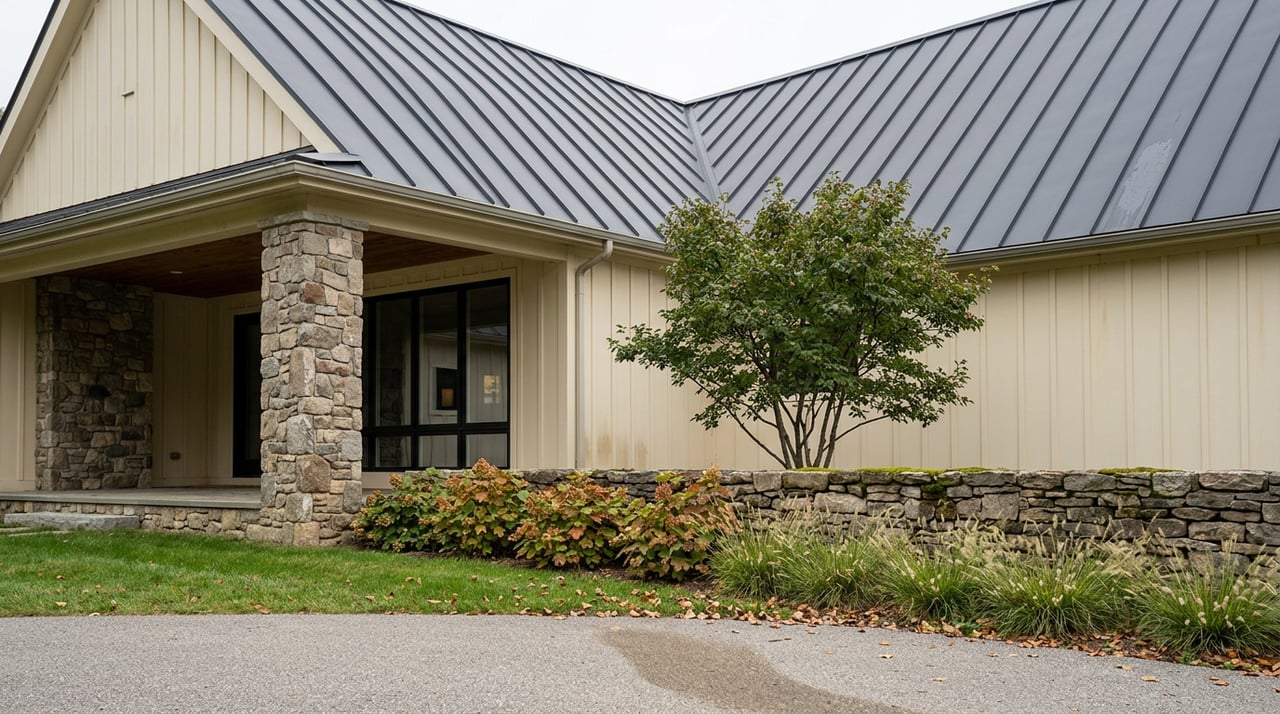
Buying New at Sanctuary on 1st: Understanding the Appraisal Question
What happens when the number your lender's appraiser writes down doesn't match the number you just agreed to pay?
For most buyers in most neighborhoods, that question gets answered by pulling comparable sales from a wide, independent pool of unrelated transactions. For a buyer purchasing new construction inside Sanctuary on 1st, the answer is more complicated, because the pool of comparable sales is small, recent, and dominated by one seller: the developer who is still building next door.
Sanctuary on 1st is an eleven-home gated enclave on 1st Street, a block off Main Street in downtown Highlands. It sits on two legacy parcels once owned by the Tate and Crane families, and it's the signature project of Sanctuary Developers, LLC, founded by Gary Williams, an Atlanta businessman whose family bought its first Highlands home atop Big Bear Pen Mountain in the early 1960s. Williams spent his career building two oil service companies in Texas before selling the last of them in 2015 and turning to residential development. Sanctuary on 1st, and its sister project The Sanctuary at Whiteside Cove, are what he's built since.
That backstory matters less for its charm than for what it implies about the transaction mechanics. With only eleven homesites, each a half-acre minimum, laid out along a private paved road with underground utilities, the enclave will never generate the volume of independent resales that makes appraising a typical subdivision straightforward. Most of the closed sales inside the gate to date have been the developer selling a spec home built by the same team: Sanctuary Developers, Futral Enterprises, and Summit Architecture, the Highlands-based firm with more than 47 combined years of architectural experience. When an appraiser needs a comparable sale for a new listing in the enclave, the most obvious ones are, in effect, the seller's own recent transactions rather than arm's-length resales between unrelated parties.
The Highlands-Cashiers Plateau saw annual price growth of 15 to 20 percent in some pockets between 2020 and 2022, a run driven by pandemic-era demand for second homes with space and privacy. That pace has since normalized. Highlands market data from spring 2026 shows appreciation settling into a range of roughly 2 to 4 percent annually, a healthier but far slower climb.
Spec pricing set during the hotter years, or pricing anchored to a developer's expectation of continued rapid appreciation, can outrun what a conservative appraisal will support today. A developer's own marketing has compared early buyers in Sanctuary on 1st to early investors in Aspen's last major residential offerings, framing scarcity and tight supply as the reason values will keep climbing. That comparison might hold up over a long horizon. It is not, however, what an appraiser is instructed to consider. An appraiser is instructed to consider closed sales, condition, and current market trends, not a narrative about a mountain town's trajectory relative to Aspen's.
This is where the comp-pool problem and the slower market intersect. If the two or three most relevant closed sales an appraiser can find are all developer-to-buyer transactions from a period when list prices assumed faster appreciation, the resulting valuation may run behind the contract price on a new spec home signed today. A recent example of the pricing context is a 5-bedroom home at 33 Sanctuary Drive, listed in spring 2026 at $4,795,000. The listing itself is not a closed sale an appraiser can use, but it illustrates the price level against which the few closed sales inside the gate may be weighed.
There's a second layer to this that has nothing to do with Sanctuary on 1st specifically and everything to do with timing. An appraisal that arrives late can complicate a purchase, especially when comparable sales are scarce.
Timing matters for buyers. If an appraisal comes back low, the buyer needs time to consider the result before moving forward with the purchase.
For a straightforward resale with dozens of nearby comps, an appraisal usually moves quickly. In a small, single-developer enclave where the appraiser may need extra time to identify and verify the handful of relevant sales, or may need to look outside the gate entirely for supporting data, that timeline is less predictable. A buyer who doesn't order the appraisal early can find it arrives too late to help assess the contract price.
None of this is a reason to avoid Sanctuary on 1st. It's a rare thing on the Highlands-Cashiers Plateau: brand-new construction, walkable to Main Street, inside a gated setting, built by a team with a track record in the market. What it does mean is that the appraisal step deserves more attention here than it might in a larger, more established neighborhood.
A few things worth doing before you sign. Ask your agent to pull every closed sale inside the enclave itself, not just nearby listings on 1st Street or Main Street, since a home built by a different team on a different lot won't carry the same weight with an appraiser as a true within-gate comparable. Confirm with your lender how quickly the appraisal will be ordered and completed, and if the timeline is tight, discuss the schedule before signing. If a valuation does come back under contract price, review the result with your lender and agent.
One of the people who has represented recent sales inside Sanctuary on 1st is Mitzi Rauers, part of the same brokerage that carries decades of institutional memory on this particular enclave, having watched it move from legacy farmland to finished homes. That kind of familiarity with an eleven-lot development, where every closed sale is a data point worth knowing by name, is exactly the difference between a generic appraisal conversation and one grounded in what's actually happened behind that gate.
Does buying a spec home still under construction change how the appraisal works? Yes. Appraisers on new construction often weight the builder's cost basis and recent comparable closings more heavily than they would on an existing resale, which is part of why a thin, developer-dominated comp pool carries more weight here than it would in an established subdivision.
Can the developer's own recent sales count as legitimate comps? They can, and often they're the most relevant sales an appraiser has available in an eleven-home enclave. The caveat is that they reflect one seller's pricing decisions rather than a broad market consensus, which is worth keeping in mind when evaluating whether a new contract price is realistic.
What if the appraisal takes longer than expected? An appraisal that arrives late may leave you with less information as you consider the purchase. This is why it is worth ordering the appraisal early and allowing enough time for a slower-than-usual turnaround.
If you're considering a purchase inside Sanctuary on 1st, or comparing it against other in-town enclaves on the plateau, the Michaud Rauers Group can walk through the specific comps, timing, and contract language that apply to this development before you're working against a deadline. Schedule a complimentary luxury listing consultation and get the numbers straight before you sign.
This article is general information, not legal, tax or financial advice. Consult a qualified professional about your situation.
Stay up to date on the latest real estate trends.

Whether you're a first-time buyer or a seasoned developer, our property services are designed to exceed expectations. We consistently sell homes quickly and above asking price.